Q&A: How a Life-Saving Transfusion Changed One Runner’s Path

Life can change in the blink of an eye. Many of us don’t experience the gravity of this until it hits close to home, and Teresa Krammer is no exception. While having a seemingly normal pregnancy, the avid runner and mom-to-be withstood the unthinkable. In an instant, she found herself in need of a massive lifesaving blood transfusion, among other extensive medical procedures. She sat down with us to recount her incredible story.
Take us back to the day your life changed. What do you remember most about that day and the days after?
Teresa: Overall, I had a relatively normal pregnancy. We found out that my son had a congenital heart defect, but it was pretty mild, so the doctors decided to induce me to control the environment he was born into. After 30 hours, my blood pressure dropped, as did his, and we were rushed into an emergency C-section.
While the doctors cared for him, I was still in the operating room, and things were not going well for me. No one was explicitly telling me anything, but I remember fighting the urge to pass out while trying to stay focused on what was happening with my son. Everything happened so fast. I lost consciousness and started hemorrhaging after the C-section and ultimately had to undergo a major surgery, which involved removing an organ, to save my life.
When I woke up in the ICU, my husband and doctor were there. I heard that I had received 10 units of blood, which I was told was a lot.
A year later, when I was brave enough to read my medical records, I found out I had actually received 41 units of blood. I’d lost 10 liters of blood — about twice my body’s volume. That really drove home how intense the situation was.
My son is three now and doing wonderfully, but it was a long road to recovery for both of us. For all that went wrong that day, a lot went right. I’m really grateful I can still run and have a relatively normal physical life.


As a marathon runner, how did you approach your recovery, both physically and mentally, after receiving lifesaving care?
Teresa: Going into pregnancy, I thought I’d do really well because I’m an endurance athlete, and labor is an endurance sport. I planned to bring all those tools with me into the delivery room. But about 24 hours in, it became clear this was something totally different. I couldn’t control this. It was outside my wheelhouse.
After surgery, I distinctly remember lying in the ICU bed, trying to process everything and thinking, “Next time I run a marathon, it’ll be cake compared to getting over this.”
I had to reconcile how this body, that had run three marathons, couldn’t safely deliver my baby. Logically I know that’s not true, but it’s a common feeling for many women. I appreciate that because I took care of my body and trained for years, I was in the best position when this trauma happened. Had I not been a runner for eight or nine years, I don’t know how I’d have handled it. I have a strong heart and a willingness to do whatever it takes to recover.
What was the biggest challenge in reclaiming your strength and returning to running?
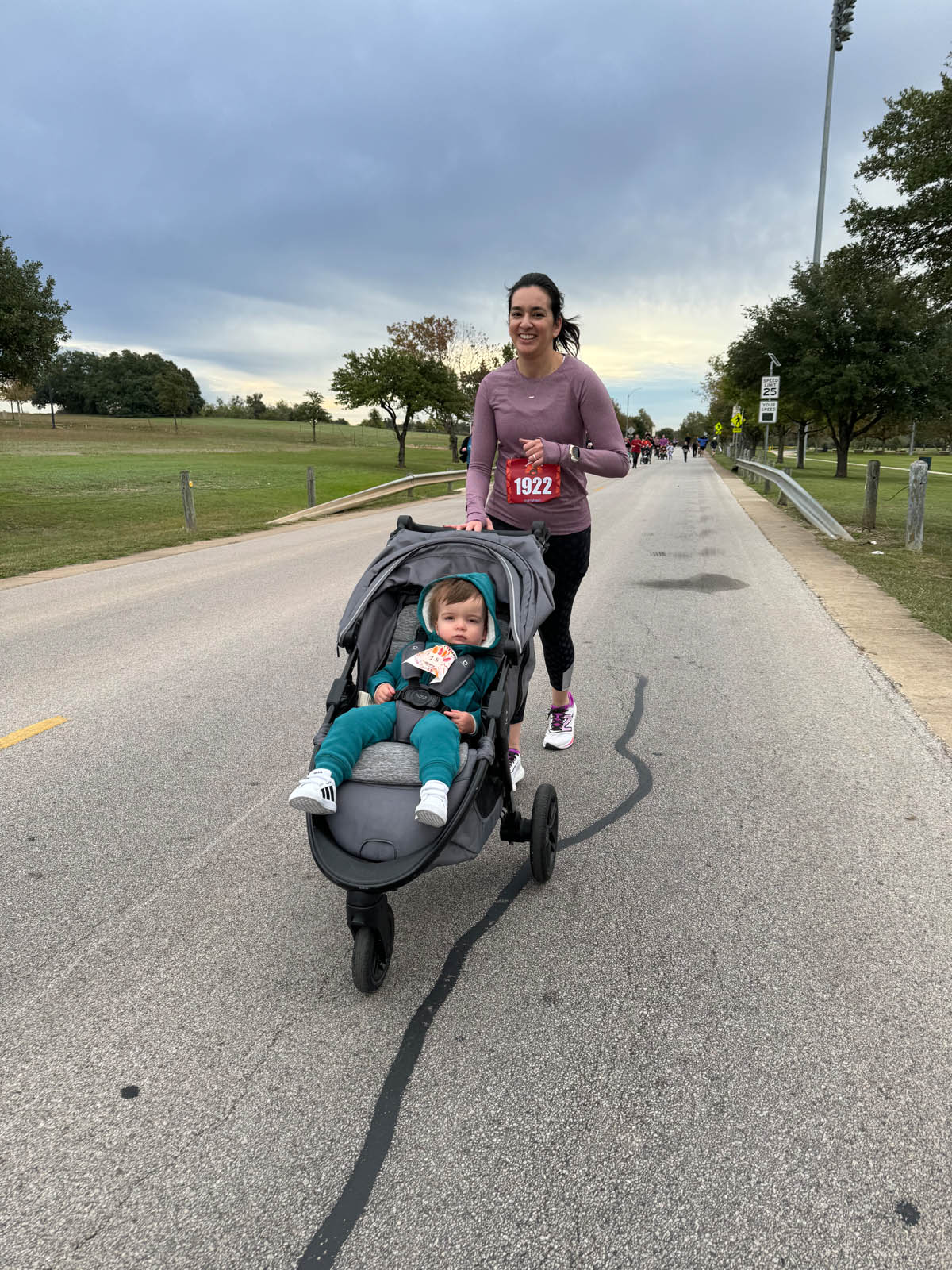
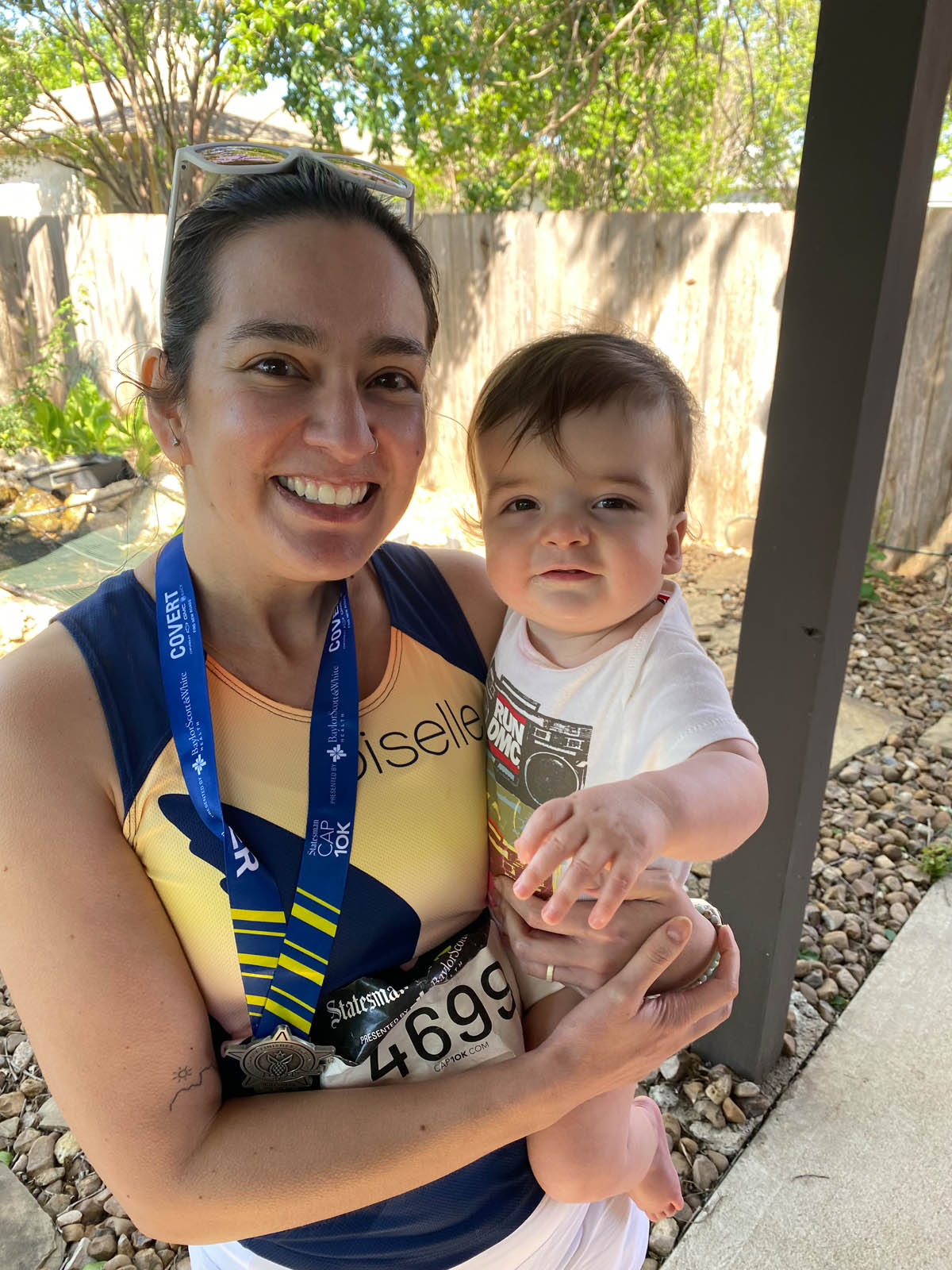
Teresa: The biggest challenge has definitely been the mental hurdles, like wanting my body to function like it used to. Trusting my body has been a real practice. I remind myself that I once ran 12×400 intervals, and even if I’m not at that pace or distance now, I can put my head down and do the work to get back to something fulfilling. I’ve found a different way to run. I’m a type A achiever and ran marathons, but now I run for enjoyment. I’m not chasing PRs anymore, and that’s okay.
Do you have any aspirations to race or compete again?
Teresa: I ran the Austin International Half in January, and I would love to get back to marathon distance again. With a small child and the time it takes to train, I don’t know when I’ll get there. Shortly after delivery, I thought I’d be able to get back to training sooner, but between my recovery and having a little one, it just wasn’t a priority.
I love the structure of training and getting out there every day. Even when I started physical therapy, I approached it with a training mentality: I know how to start from zero. This zero just looked very different.
After a life-changing experience, every run feels like, “Man, I get to be out here and do this.”
Prior to your transfusion, did you have any knowledge about blood donation?
Teresa: I’ve never donated blood personally, but it’s something I really want to do now. It’s a funny coincidence that my dad is a lifelong blood donor. He’s been aiming to donate 30 gallons over his lifetime. He’s always understood the impact of it, even though he didn’t know exactly who he was helping.
How did you learn about We Are Blood?
Teresa: Part of my healing involved digging into data and quantifying things. After my surgery, I heard that I’d gone through so much blood that I wiped out the hospital’s supply, and they had to bring more in. That stuck with me. Central Texas needs 200 units of blood a day, and since I received 41 units, that was a big hit.
I wanted to get involved with advocacy, and when I saw that We Are Blood had a tent at the Austin International Half Marathon Expo, it was a sliding door moment. I could either walk over and talk to them, or just leave. I chose to go thank them for their work, and from there it turned into me sharing my story.
How has your perspective on blood donors and the donation process changed?
Teresa: Being a recipient made me realize that if enough people hadn’t donated, things could have turned out very differently. It didn’t fully hit me until I did a testimonial with We Are Blood. Seeing myself running in that video is my way of thanking donors. Sharing my story has been cathartic and helps remind others that their donation truly matters.

Follow Teresa’s journey @teresa.krammer and @wearebloodtx or visit weareblood.org to learn more about We Are Blood and how you can make a life saving donation, like the one, or many that saved Teresa’s life.